

The Art of Geometric Tilework in Moorish Ceramics
Exploring the centuries-old tradition of zellige tilework and how its intricate geometric patterns continue to inspire contemporary ceramic art.
The tradition of Moorish geometric tilework stretches back over a thousand years, originating in the great palaces and mosques of Al-Andalus and the Maghreb. At its heart lies the zellige — hand-cut ceramic tiles arranged into endlessly repeating, mathematically precise patterns that seem to dance across walls and floors.
The Mathematics of Beauty
What makes Moorish geometric art so captivating is its underlying mathematical rigour. Every pattern is built on a grid of interlocking polygons — stars of eight, ten, or twelve points radiating outward, never repeating exactly but never breaking their rhythm either. Long before European mathematicians formalised the concept of tessellation, Moorish artisans had mastered it in clay and glaze.
From Fired Clay to Living Space
The process of creating zellige begins with clay, fired in wood-burning kilns at temperatures exceeding 900°C. Once cooled, the tile is glazed and refired, then chipped by hand into precise geometric shapes using a specialised hammer called a maa’loum. Each piece is unique — infinitesimally different from its neighbours — yet must fit seamlessly into the whole.
Contemporary Resonance
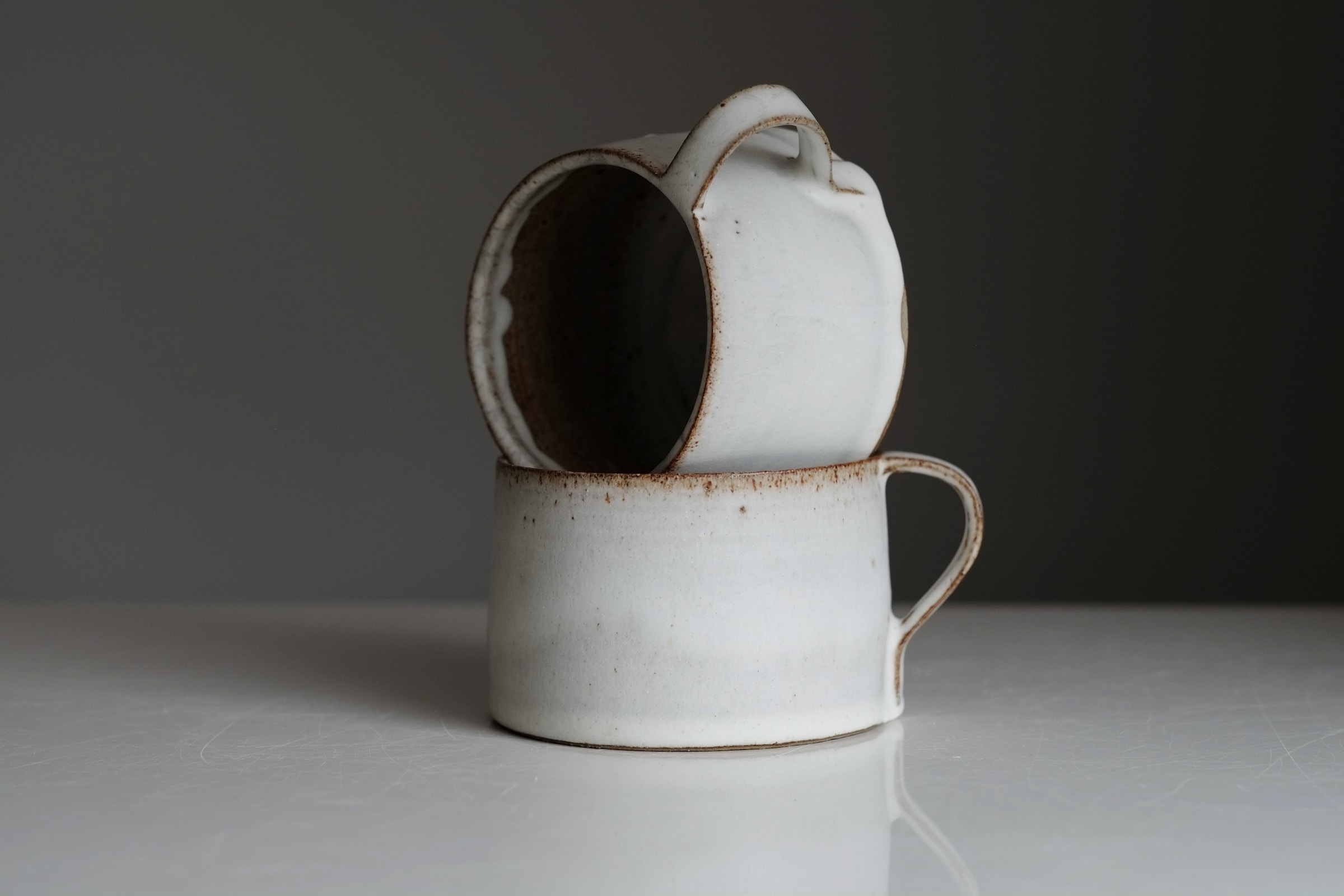
At Moorish Studio, we draw on this legacy not to replicate the past, but to carry its spirit forward. Our vessels, bowls, and wall pieces echo the logic of the grid while embracing the imperfections of hand-thrown and hand-built forms. Clay remembers every touch; geometry provides the framework within which that memory becomes art.
The interplay between perfect structure and human variation is, we believe, what gives Moorish ceramics their enduring power. The pattern is eternal; the hand is irreplaceable.